The Expo Park was built for the 2010 Shanghai Expo (aka World Fair), and, controversially, involved the clearance of 2.6 ㎢ of riverfront. 73 million people attended the expo; US$48 billion was spent in preparation.
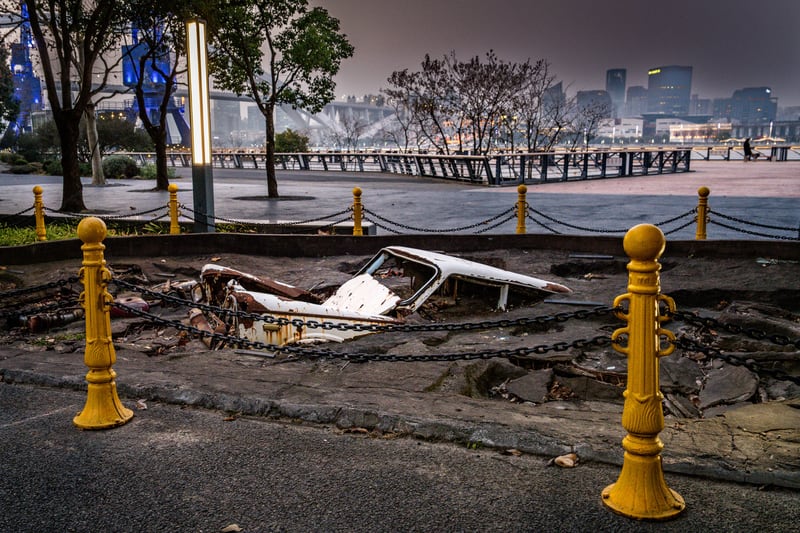
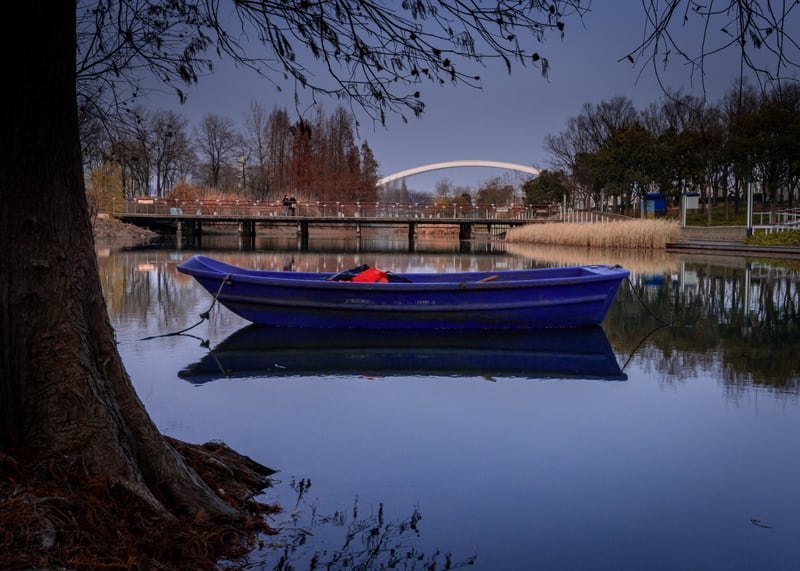
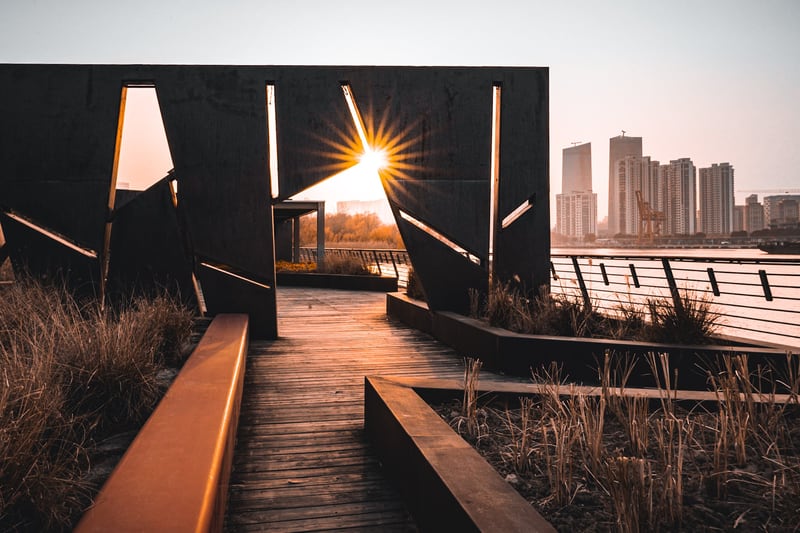
“What objects have an emotional effect on us and why? What makes our connection with some objects emotional? “The project reconstituted an archaeological site. These excavated obiects are symbols composing a history of production in and around the city of Shanghai. The relics, once buried in our city's past, presents many generations of progress of the people of Shanghai and their creation of better city life. They are the source of feeling our deep emotional connections with past and future.”The lake is in the Shanghai Expo Park. It runs alongside, but does not contact, the Huangpu River. The arch in the distance is the Lupu Bridge. Once the longest arched bridge in the world, it is now third, behind the Ping’nan Third Bridge in Guangxi and the Chaotianmen Bridge in Chongqing. The six-lane bridge is named for the Luwan and Pudong districts that it connected when it was built. (Luwan is now part of Haungpu.) Like most large structures in Shanghai, LED lights animate it at night. The Expo Park was built for the 2010 Shanghai Expo (aka World Fair), and, controversially, involved the clearance of 2.6 ㎢ of riverfront. 73 million people attended the expo; US$48 billion was spent in preparation.This thick steel plate — one of several on the site — is embedded in glass on the Reed Platform, which extends into the Huangpu River from the edge of the Shanghai World Expo Houtan Wetland Park. The park was originally the site of the Iron and Steel Factory (Pudong Iron & Steel Group) and the Houtan Ship Repair Factory. The rough-surfaced steel plates have the appearance of ship hull material. Although stylized as “Reed’s Platform" on nearby English-language signage, the name of the platform is 芦荻台 "reedgrass platform", and it incorporates fields of reeds into its design.